

Northeast Florida Mold Remediation
Mold Remediation Jacksonville Florida
Talk through what you are seeing and get connected with a local mold remediation professional — call 904-792-8590.
Homeowner Reviews
What Jacksonville Property Owners Say
“We found dark staining behind a bathroom vanity and had no idea how far it went. The containment went up before anything was opened, and we got a clear explanation of what was being removed and why.”
“Our attic smelled musty all summer. They traced it back to a ventilation problem instead of just treating the sheathing, which is exactly what I was hoping someone would finally do.”
“The moisture readings made the whole thing understandable. Instead of guessing, we could see which walls were still wet and which were fine to leave alone.”
“I was worried about black mold near my kids' bedroom. They explained what could be cleaned, what had to come out, and kept the work area sealed off the entire time.”
“Crawl space humidity had been an issue for years. The plan covered the mold and the moisture source together, and the follow-up check gave us confidence it was actually handled.”
“Straightforward from the first call. No scare tactics, no pressure to test everything — just a clear scope for the area that was affected.”
“After a slow AC leak we had mold on the drywall and baseboards. Removal was tidy, dust was controlled, and they walked us through the area before containment came down.”
“They answered every question in plain language, including the ones about what we did not need. That honesty is why I would call them again.”
Connect with a local mold remediation professional in Jacksonville and Northeast Florida
Mold Problems Need More Than Surface Cleaning
The dark spotting on a ceiling or the musty smell in a closet is rarely the actual problem — it is a symptom of moisture that has been sitting somewhere longer than it should. Plumbing leaks behind walls, roof leaks after a storm, HVAC condensation pooling in a closet, and general high indoor humidity in Jacksonville's climate all push materials past the point where mold can take hold.
Storm intrusion during Northeast Florida's rainy season and hurricane systems adds another path in, driving water damage into drywall, baseboards and flooring that stays damp long after the rain stops. Damp drywall holds moisture in the paper facing, which is exactly the material mold prefers, and it can look fine from the surface while the interior stays saturated.
Attics and crawl spaces are the two areas that go unnoticed longest. Attic moisture builds from roof leaks, poor ventilation and condensation on ductwork, while crawl space humidity comes from ground moisture and vented open framing that never quite dries out in Jacksonville's climate. Both areas can carry a mold problem for months before it shows anywhere a homeowner would normally look.
Our Services
Remediation, Removal, Inspection Support and Structural Work
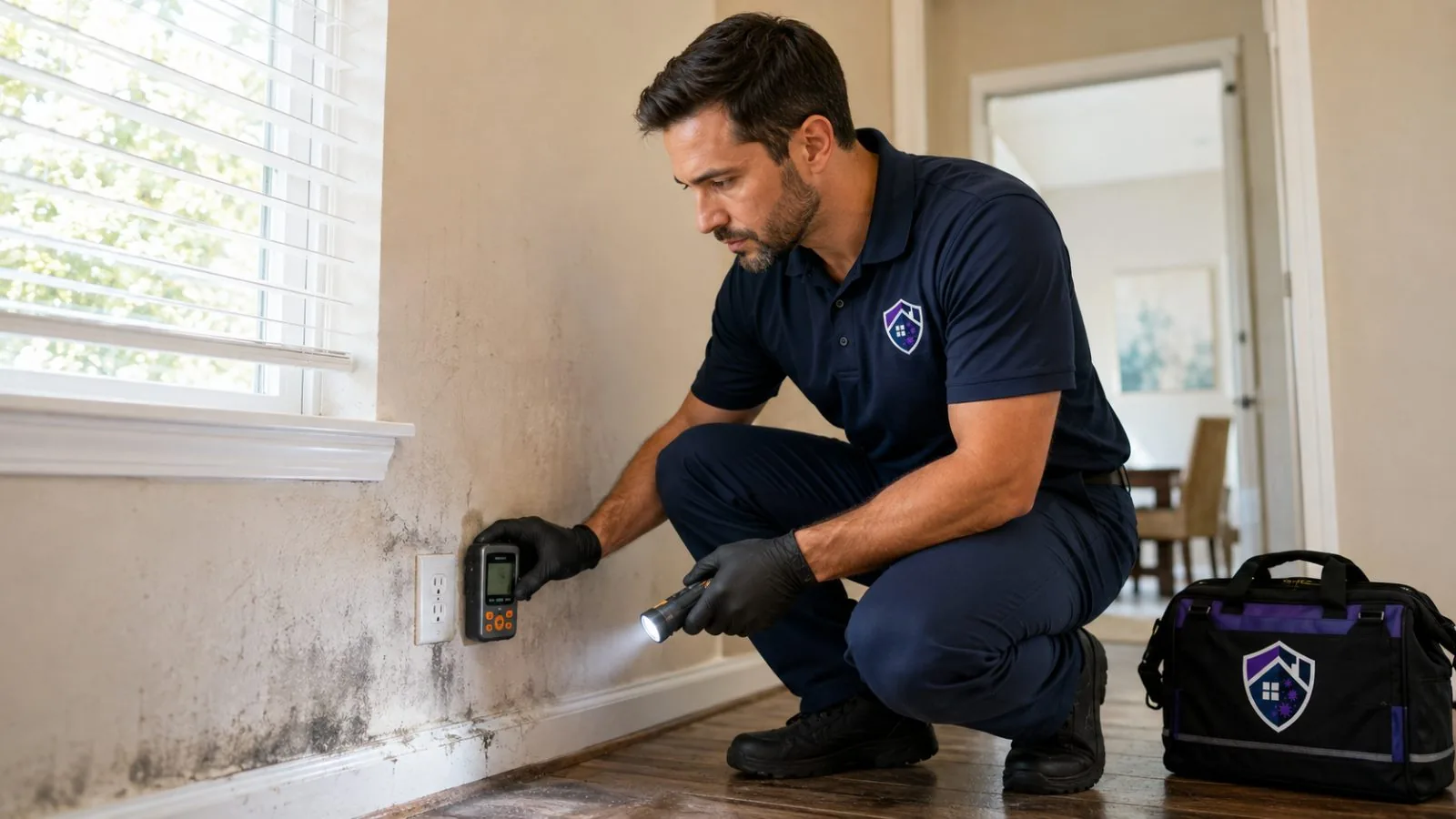
Every service below addresses a different stage of the same problem: moisture finding its way into a structure and mold following behind it. Mold remediation and mold removal cover general interior work, mold inspection and testing help confirm scope before or after a job, and black mold removal applies extra containment and material-removal discipline to Stachybotrys and similar dark mold growth. Attic mold remediation and crawl space mold remediation deal with the two areas of a home that hold moisture longest and get inspected least. You can request any of these individually, or as part of one combined visit if you are seeing mold in more than one area.
Remediation & Removal
Mold Remediation
We connect you with a local mold remediation professional who addresses the moisture source first, then removes and treats every affected material correctly.
View service →Remediation & Removal
Mold Removal
We connect you with the right pro for surface and localized mold growth — the right cleaning method for the material, without the cost of a full remediation scope.
View service →Inspection & Testing
Mold Inspection & Testing
A proper mold inspection, done by a licensed Florida mold assessor, separates what you can see from what is actually driving the growth, so any remediation scope is built on facts instead of guesswork.
View service →Remediation & Removal
Black Mold Removal
We connect you with a professional who handles dark, black-looking mold growth with the same containment and material discipline regardless of species, wherever it turns up in your home.
View service →Attic & Crawl Space
Attic Mold Remediation
Jacksonville attics run hot and humid for most of the year, and mold on roof decking almost always traces back to a specific ventilation or moisture problem that a qualified professional has to fix, not just clean.
View service →Attic & Crawl Space
Crawl Space Mold Remediation
Raised-floor and pier homes across Jacksonville hold ground moisture under the living space year-round, and that moisture reaches upstairs rooms as a musty smell long before anyone sees actual growth.
View service →Remediation & Removal
Contained removal of mold-affected materials plus correction of the moisture source behind it.
Inspection & Testing
Finding where moisture is coming from and confirming how far mold growth actually extends.
Attic & Crawl Space
Remediation in the humid, poorly ventilated spaces where Jacksonville mold problems usually start.
Mold Problems Need More Than Surface Cleaning
Visible Mold Is Usually a Moisture Symptom
A wet spot that appears overnight, or a musty smell that gets stronger every week, usually means the moisture source is still active. Waiting to address it lets the affected area grow and increases how much material eventually needs to be removed.
We ask about the timeline and location of what you are seeing before we connect you with a local mold remediation professional, because a fresh leak needs a different first step than mold that has clearly been developing for months. Either way, moisture-source correction happens before or alongside remediation, not after.
Why Property Owners Choose Us
Moisture-First, Containment-Focused Remediation
Moisture-focused remediation
The local professional you're connected with identifies and addresses the moisture source driving the mold before finishing the cleanup, so the same spot does not return within a few months.
Containment-focused procedures
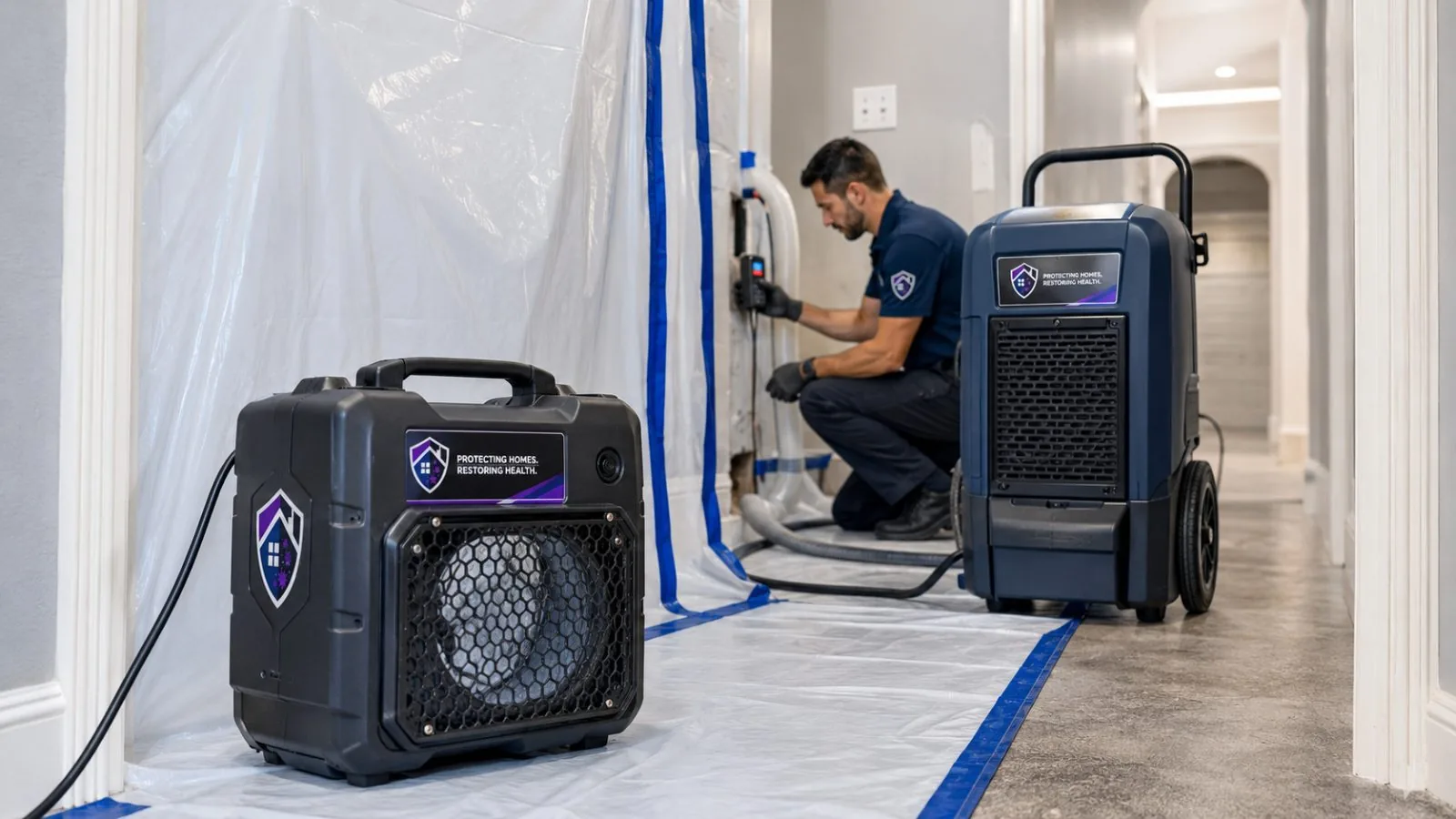
Barriers and negative air pressure are set up appropriate to the space, keeping spores and dust out of rooms that were not already affected.
Jacksonville climate experience
High humidity, heavy rain, hurricane season and long cooling seasons all shape how mold develops here, and the pros we connect you with account for that.
Material-specific remediation decisions
Porous materials that have been wet too long get removed; materials that can be cleaned and dried get treated instead of torn out unnecessarily.
Clear communication
You get a written scope of what is affected, what containment looks like, and what the job involves before work starts.
Thorough cleanup planning
HEPA filtration and a documented cleanup sequence are part of the plan from the first visit, not an afterthought.
Service Area
Twelve Communities Across Northeast Florida
We connect property owners across Duval, St. Johns and Clay County, including Jacksonville proper, the beaches communities, Mandarin, Orange Park, Fleming Island, St. Johns, Fruit Cove, Nocatee, Ponte Vedra Beach, Julington Creek and Bartram Park, with local mold remediation professionals.
Older Jacksonville homes, newer construction near St. Johns County, and coastal properties near the beaches each hold moisture differently, and the professional you're matched with adjusts their approach to the construction type and age of the property, not just the square footage affected.

About
A Moisture-First Approach to Mold in Jacksonville
Jacksonville's combination of high humidity, heavy rainfall and long cooling seasons means mold rarely shows up for one simple reason. The local mold remediation professional you're connected with starts every job by working out where the moisture is actually coming from, because a remediation that skips this step tends to come back within a season.
Once the source is identified, the pro sets up containment appropriate to the space, whether that is a single bathroom, an HVAC closet, an entire attic deck, or a vented crawl space. Containment keeps spores and dust from spreading into unaffected rooms while material-specific removal and cleaning happens inside the barrier.
HEPA filtration is standard practice during removal and cleanup, and decisions about which materials can be cleaned versus which need to be removed are based on porosity and how long the material has been wet. That distinction changes both the scope and the outcome of the job.
Planning tool
Mold Remediation Cost Calculator Jacksonville FL
Use this estimator to get a rough planning range for mold remediation based on the size of the affected area, materials involved, moisture conditions, and project complexity. It is a starting point for the question most homeowners ask first: how much does mold remediation cost?
Estimated Mold Remediation Range
$1,250 – $3,350
This calculator provides a general planning estimate only. Actual remediation costs depend on affected square footage, materials, moisture source, containment needs, access, demolition requirements, and the extent of the problem. An on-site assessment is required for accurate pricing.
Property check
How Serious Is the Mold Problem?
Answer a few property-condition questions to better understand whether the situation may warrant professional evaluation. Homeowners often use this when deciding whether they need mold remediation, or how serious mold in a house may be after a leak.
Property-condition result
Lower concern
0 of 8 questions answered (score 0)
Based on your answers, the visible signs are limited. Keep in mind that limited visible signs do not confirm the absence of hidden moisture or mold behind drywall, under flooring, or inside wall cavities. Continue monitoring humidity and check the area again after any rain or plumbing issue.
This tool is for general property-condition guidance only and does not replace professional inspection, testing, remediation assessment, or medical advice.
Cost drivers
What Affects Mold Remediation Cost?
Two projects with the same visible patch can price very differently. These are the factors that move a mold remediation estimate in Jacksonville, Florida up or down.
Affected square footage
Square footage is the single biggest driver of mold remediation cost in Jacksonville FL. A contained 10 sq ft patch behind a vanity is a very different project from 250+ sq ft spread across several rooms.
Material type
Porous materials such as drywall, insulation, carpet and cabinetry usually have to be removed rather than cleaned, while sealed framing and hard surfaces can often be treated in place.
Moisture source
An unrepaired roof leak, plumbing supply line or crawlspace humidity problem has to be corrected first, or mold returns. Unknown or ongoing moisture adds diagnostic work to the scope.
Containment needs
Barriers, negative air pressure and HEPA air scrubbing protect the rest of the home. More rooms and more airflow paths mean more containment, which raises mold removal cost in Jacksonville.
Demolition and disposal
Cutting out drywall, pulling flooring or removing cabinets adds labor, dumpster and rebuild costs on top of the remediation itself.
HVAC involvement
When growth reaches vents, returns or the air handler, the system has to be evaluated and cleaned so spores are not redistributed through the house.
Attic or crawlspace access
Tight, hot or low-clearance spaces slow work down and require extra equipment staging, which is why attic and crawlspace projects price higher per square foot.
Cleanup complexity
Contents handling, detailed HEPA cleaning, antimicrobial application and post-remediation verification all affect where a project lands in the estimated range.
Next steps
When Should You Consider Mold Remediation?
Mold remediation is usually considered when moisture has been present long enough for growth to establish in building materials. The signs below are the common triggers.
Visible growth
Discoloration spreading across drywall, ceilings, trim or framing is the clearest sign that removal — not surface cleaning — is being considered.
Recurring moisture
If a wall, slab edge or crawlspace keeps getting damp, the conditions that produced mold are still present and remediation without a moisture fix rarely holds.
Musty odors
A persistent musty smell in one room, a closet or near an air return often points to growth in a cavity you cannot see yet.
Water-damaged materials
Mold after water damage commonly shows up as soft, swollen or stained drywall, buckled flooring, or insulation that stayed wet longer than 24–48 hours.
Spreading areas
An area that is visibly getting larger week over week suggests an active moisture supply and a growing scope of work.
Hidden moisture concerns
Moisture meters and thermal imaging during a mold inspection are how hidden wet material behind finishes gets mapped before demolition decisions are made.
HVAC or inaccessible areas
Anything involving air handling equipment, attics, crawlspaces or wall cavities generally warrants professional evaluation rather than a do-it-yourself attempt.
Jacksonville Mold & Humidity Guide
High Humidity and Dew Point in Jacksonville
Jacksonville sits in a subtropical climate where outdoor dew points regularly climb into the 70s during summer months. That level of moisture in the air means any surface running slightly cooler than the surrounding air, a duct, an exterior wall, a window frame, can collect condensation even when nothing is visibly leaking.
Indoor humidity above roughly 60 percent gives mold spores enough moisture to start colonizing dust, drywall paper and wood without any standing water at all. Homes with oversized or poorly balanced air conditioning often run cold enough to feel comfortable while still leaving indoor humidity higher than it should be, which is one of the quieter causes of mold local remediation professionals often see in otherwise well-maintained houses.
Heavy Rain, Tropical Weather and Storm Intrusion
Northeast Florida's rainy season and periodic tropical systems bring sustained, heavy rainfall that tests every seam in a roof, window and exterior wall. Wind-driven rain during a tropical storm or hurricane can push water into places that stay bone dry during a normal afternoon shower, including soffits, attic vents and window flashing.
Storm intrusion often goes unnoticed for days because the water enters during the storm and then dries on the surface while soaking into insulation or drywall behind it. By the time a stain or smell shows up, the moisture has usually had a week or more to work into the material, which is why the remediation professional you're connected with asks about recent storms whenever the remediation professional you're connected with assess a new case.
AC Condensation and Oversized Systems
Air conditioning is one of the most common indoor moisture sources in Jacksonville homes. Condensate lines that clog or systems sized larger than the home actually needs can cycle on and off too quickly to properly dehumidify the air, even while keeping temperatures cool.
A clogged condensate drain pan or line can also overflow slowly into a closet, ceiling cavity or subfloor without ever triggering an obvious leak, and that slow, repeated wetting is exactly the pattern that produces persistent mold around HVAC closets and the ceilings below air handlers.
Roof Leaks and Plumbing Failures
Roof leaks in Jacksonville often start small, a lifted shingle, a cracked pipe boot, aging flashing around a chimney or skylight, and worsen gradually with each rain event rather than announcing themselves all at once. Water can travel along rafters or trusses before it ever drips through a ceiling, so the visible stain is frequently several feet from where the leak actually started.
Plumbing failures behind walls or under slabs follow a similar pattern. A slow supply line leak or a failing wax ring under a toilet can wet drywall and subfloor for weeks before a smell or discoloration gives it away, and by that point the affected material has usually already begun supporting mold growth.
Attic Temperatures and Crawl Space Moisture
Jacksonville attics regularly reach well over 120 degrees in summer, and that heat combines with any roof leak, poor ventilation or condensation on ductwork to create a moisture-friendly environment that few homeowners ever check. Insulation can trap that moisture against the roof deck, extending how long the wood stays wet after any single event.
Crawl spaces face the opposite problem: ground moisture, humid outside air moving through vents, and limited airflow keep relative humidity high near the framing and subfloor almost year-round. Both spaces are easy to overlook because they are rarely visited, which is exactly why they tend to carry the most advanced mold growth by the time it gets found.
Surface Mildew Versus a Moisture-Source Problem
Not every dark spot on a bathroom ceiling or window sill points to a structural moisture problem. Surface mildew often develops from everyday condensation — a shower that runs hot without adequate ventilation, or a window that fogs during cooler mornings — and it tends to sit only on the outermost layer of paint or caulk without penetrating deeper. Wiping it away with a household cleaner and improving ventilation is often enough to keep it from returning in these cases.
A moisture-source problem looks similar at first glance but behaves differently over time. If the same spot returns within weeks of cleaning, if the discoloration spreads rather than staying in one place, if there is a musty smell that persists even after the visible mark is removed, or if the material feels soft, warped or discolored beyond the surface, that points to moisture reaching the material itself rather than just settling on top of it.
The practical test is persistence and depth. Surface mildew generally responds to cleaning and improved airflow and stays gone. A moisture-source problem keeps coming back because something behind the surface — a leak, condensation buildup, or trapped humidity — keeps feeding it, and no amount of surface cleaning addresses that ongoing supply.
When in doubt, treating a recurring or spreading spot as a moisture-source problem rather than assuming it is harmless mildew is the safer starting point, since an inspection can rule out a bigger issue quickly, while ignoring an active moisture problem generally lets it spread further before it is finally addressed.
Why Mold Comes Back After a Cleanup
The most common reason mold returns after a cleanup, whether it was done by a homeowner or a previous contractor, is that the moisture source was never actually corrected. Cleaning or even removing affected material addresses what already grew, but if the leak, condensation issue or humidity problem behind it is still active, conditions for regrowth are still in place and it is usually a matter of time before the same spot shows discoloration again.
A second common cause is incomplete removal — cleaning a visible surface while leaving contaminated material behind it or nearby, particularly in cases where porous material had already absorbed enough moisture that surface cleaning could not reach mold growing within it. This is why material-specific decisions about cleaning versus removal matter as much as the cleaning process itself.
Rebuilding too early is a third factor: closing up a wall, ceiling or floor with new finishes before the framing and any remaining materials have fully dried traps residual moisture behind the new surface, which can restart growth in a space that now looks finished from the outside but is still damp underneath. Confirming the area is dry before rebuild, and making sure the original moisture source has actually been addressed, are the two checks most likely to prevent a repeat problem.
Even a properly completed remediation can be undermined by an unrelated new moisture event afterward, such as a fresh roof leak or a new plumbing issue, which is a separate risk from the original problem returning but can look identical to a homeowner noticing discoloration again in a previously remediated area.
FAQ
Common Mold Questions
How do I know if I have a mold problem or just a stain?
- A stain alone does not confirm mold, but discoloration paired with a musty smell, recent water exposure, or a spot that keeps returning after cleaning usually does. An inspection can confirm what is actually growing before you decide on next steps.
Do you need to find the moisture source before starting remediation?
- Yes. Remediation without correcting the moisture source tends to fail within a season, so identifying whether the cause is plumbing, roofing, HVAC condensation or humidity happens before or alongside the cleanup work.
What does containment actually involve?
- Containment uses physical barriers, and sometimes negative air pressure, to keep the work area separate from the rest of the structure during removal. This keeps spores and dust from spreading into rooms that were not already affected.
Is black mold more dangerous than other types?
- Any mold growth indicates a moisture problem worth addressing, and dark mold such as Stachybotrys gets extra containment and material-removal discipline because of how it grows on wet cellulose materials. Testing can confirm what species is present if that matters for your situation.
Can mold in an attic really affect the rest of the house?
- Yes, especially if the attic shares air handling equipment or return ducts with the living space, or if the growth is large enough that spores migrate through soffit vents or attic access points.
Why does crawl space mold seem to keep coming back?
- Crawl spaces often stay humid year-round because of ground moisture and vented outside air, so if only the visible growth is cleaned without addressing ventilation or moisture intrusion, conditions for regrowth remain in place.
Do you handle both the mold and the moisture repair?
- The local mold remediation professional you're connected with typically handles both the mold remediation and moisture-source identification, and coordinates with repair trades such as roofers or plumbers when the underlying leak needs work outside their scope.
How long does a typical remediation project take?
- Timelines vary with the size of the affected area and whether materials need to dry before removal or rebuild can begin, so the pro you're connected with gives you a project-specific estimate after evaluating the space rather than a fixed number in advance.
Should I get testing before or after remediation?
- Testing before remediation can confirm scope in ambiguous cases, and testing after cleanup can verify that levels have returned to normal, though not every project requires both depending on how visible and confirmed the growth already is.
How can I tell if a bathroom ceiling spot is just mildew or something bigger?
- If it wipes away with cleaning and improved ventilation and does not return, it is likely surface mildew. If it comes back within weeks, spreads, or the surrounding material feels soft or discolored beyond the surface, it points to an ongoing moisture source worth having checked.
Why did mold come back after I already cleaned it myself?
- Household cleaning generally addresses only the visible surface, and if the underlying moisture source was not identified and corrected, or if affected porous material was left in place, the conditions that grew the mold the first time are usually still present.
Does painting over a mold stain fix the problem?
- Painting over a stain does not address moisture in the material underneath, and in many cases paint can trap that moisture, leading to the mold reappearing through the new paint or spreading to adjacent areas.
Call 904-792-8590 to talk through what you are seeing, or send the details through the form and a coordinator will connect you with a local mold remediation professional.
Connect with a local mold pro